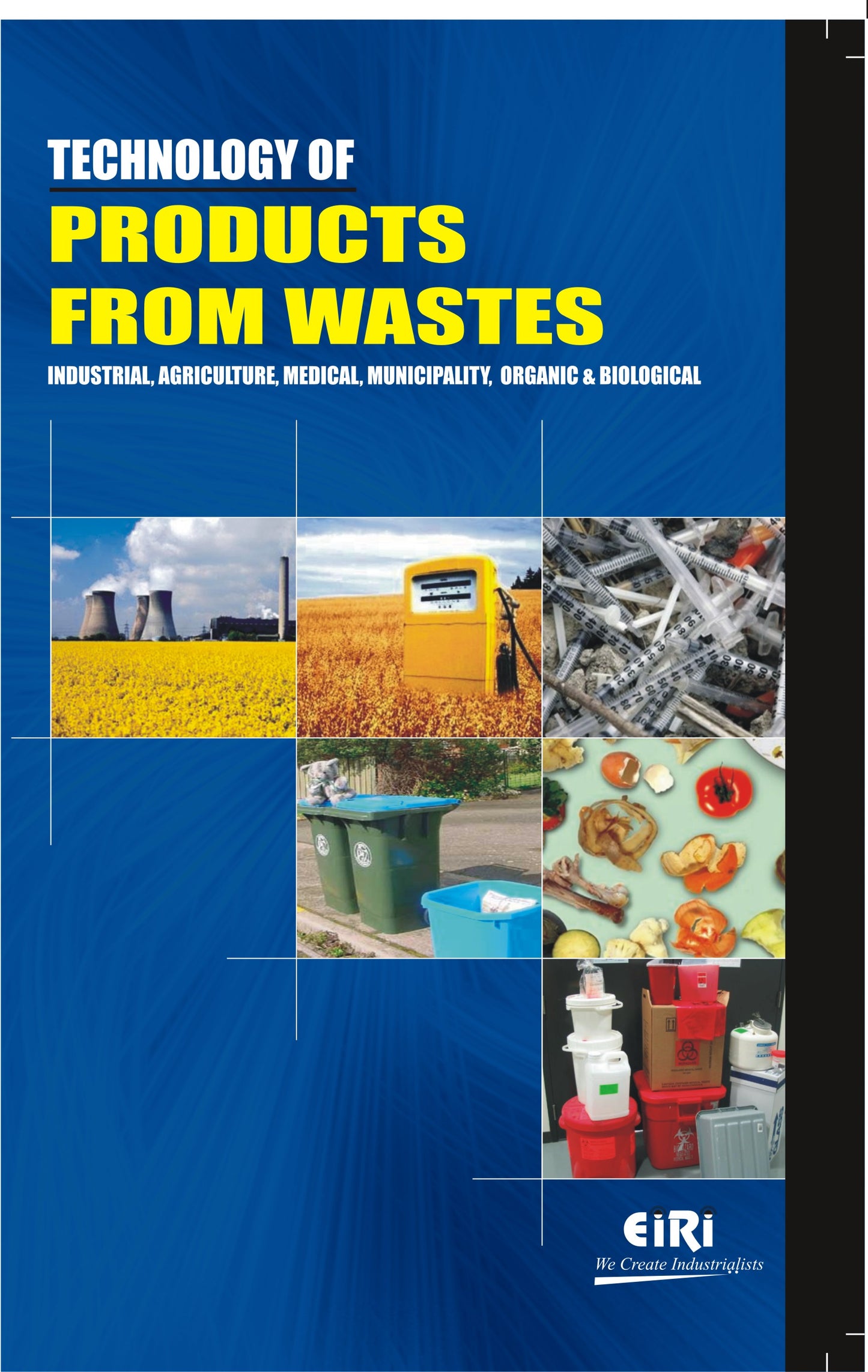
Technology Of Products From Wastes Industrial, Agriculture, Medical, Municipality, Organic & Biological (Hand Book)
Technology Of Products From Wastes Industrial, Agriculture, Medical, Municipality, Organic & Biological (Hand Book)
Couldn't load pickup availability
About This Book
Technology of Products from Wastes (Industrial, Agriculture, Medical, Municipality, Organic & Biological) (Engineers India Research Institute, ISBN 9788189765958) is a compilation of patented apparatus and process technologies for treating and converting waste streams, presented in patent specification form with descriptions of drawings and preferred embodiments.
Municipal and wastewater technologies cover the preparation of liquid fuel and nutrients from municipal waste water, and biological waste water treatment systems. Agricultural technologies cover the purification of animal waste, conversion of agricultural waste to liquid fuel, energy extraction from agricultural residues with the mass balance for monoalkyl ester production, and the treatment of farm effluent through clarification, precipitant addition and dewatering, supported by experimental data from dairy washings clarification and farm slurry dewatering trials.
Thermal and energy technologies cover a waste treatment apparatus described component by component, including lid and seals, access drawer, heating element, air and water tubes, cooling radiator, water scrubber, purification system, waste gas flare, loading chute, cage, chamber jacket, control electronics, air compressor and valves, together with its process cycle, alongside processes for the disposal of combustible waste, apparatus for carbonising agricultural products, and methods for preparing waste-derived fuels.
Medical and biological technologies cover several distinct medical waste disposal devices, processing apparatus and treatment units, a biological apparatus, animal waste disposal apparatus, a biological composition for processing animal waste, biological waste conversion systems, biological treatment of hazardous waste, apparatus for reduction of biological waste sludge, and compositions for disinfecting waste. Organic waste technologies cover composting apparatus and organic waste recycling methods with their preferred embodiments.
Frequently Asked Questions
What does Technology of Products from Wastes cover?
Technology of Products from Wastes (EIRI, ISBN 9788189765958) compiles patented technologies for waste treatment and conversion across five waste categories. Its main divisions are: municipal waste water conversion to fuel and nutrients; agricultural and animal waste purification, energy extraction and effluent treatment; thermal treatment apparatus including carbonisation and combustible waste disposal; waste-derived fuel preparation; medical waste disposal and treatment devices; biological treatment systems for waste water, sludge and hazardous waste; and organic waste composting and recycling methods.
What kind of book is this, and who is it written for?
This is a patent compilation rather than a conventional process handbook. Its content is presented in patent specification form, with each technology described through its drawings, preferred embodiments and operating detail as filed. That makes it suited to readers doing technology scouting, prior art review, research and development planning, or equipment concept development, and to researchers, engineers and technical libraries working on waste treatment. Readers looking for step-by-step manufacturing processes, formulations or costed project profiles of the kind found elsewhere in this series will not find that format here, and a companion volume on industrial and agricultural waste recycling in the same series is the better fit for that need.
Does the book include project economics or plant costs?
No. This title does not include project profiles with land and building, plant and machinery, fixed capital, working capital or turnover figures. Its value lies in the technologies themselves: the apparatus configurations, process cycles, treatment sequences and compositions documented in the source patents. Readers who need capital cost estimates for a waste processing or recycling venture should consult a project profile publication, several of which cover overlapping waste streams including plastics, batteries, tyres, metals and agricultural residues with full costings.
What agricultural waste technologies does the book cover?
Agricultural coverage is one of the stronger sections. It includes apparatus and methods for purification of animal waste with misting requirements and an energy comparison across treatment methods, conversion of agricultural waste to liquid fuel with associated apparatus, systems for extracting energy from agricultural waste including the mass balance for monoalkyl ester production, and apparatus for carbonising agricultural products. Effluent treatment content covers clarification testing, evaluation of precipitant addition performance and dewatering testing, with experimental results reported for the clarification of dairy washings and the dewatering of farm slurry.
What medical waste technologies are included?
Several distinct medical waste technologies are documented, each as a separate patented device or method. These include medical waste disposal devices, apparatus for processing medical waste, and medical waste treatment units and methods, each presented with its drawings, detailed description and operating sequence. Related biological technologies covered include treatment systems for biological waste water, apparatus for the reduction of biological waste sludge, biological waste conversion systems, biological treatment of hazardous waste and compositions for disinfecting waste.
How can patent-based technology documentation be used commercially?
Patent specifications serve several practical purposes. They show how a problem has been solved technically, including apparatus configuration and operating parameters that are rarely published elsewhere. They establish what has already been claimed, which matters when developing a competing or improved design. They identify approaches that have lapsed into the public domain and may be freely used. And they provide a starting point for discussions with equipment suppliers or licensors. Readers should note that patent status varies by jurisdiction and over time, and that anyone intending to build or commercialise a documented technology should obtain a freedom-to-operate assessment from a qualified patent attorney before proceeding.
What waste treatment apparatus does the book describe in detail?
One waste treatment apparatus is documented component by component, covering the lid and seals, access drawer, heating element, air and water tubes, cooling radiator, water scrubber, purification systems, waste gas flare, loading chute, cage, chamber waste jacket, control electronics, air compressor and valves, together with the full process cycle. Further apparatus documented includes systems for the disposal of combustible waste, carbonisation of agricultural products, preparation of waste-derived fuels, composting of organic waste, animal waste disposal, and sludge reduction, each described through its own drawings and preferred embodiments.
Which waste streams does the book address?
The book is organised around five waste categories named in its subtitle. Industrial waste is addressed through combustible waste disposal and hazardous waste treatment. Agricultural waste is addressed through animal waste purification, effluent clarification and dewatering, carbonisation and conversion to liquid fuel. Medical waste is addressed through several dedicated disposal and treatment devices. Municipal waste is addressed through conversion of waste water to liquid fuel and nutrients and through biological waste water treatment. Organic and biological waste is addressed through composting apparatus, recycling methods, biological conversion systems, sludge reduction and disinfecting compositions.
Share