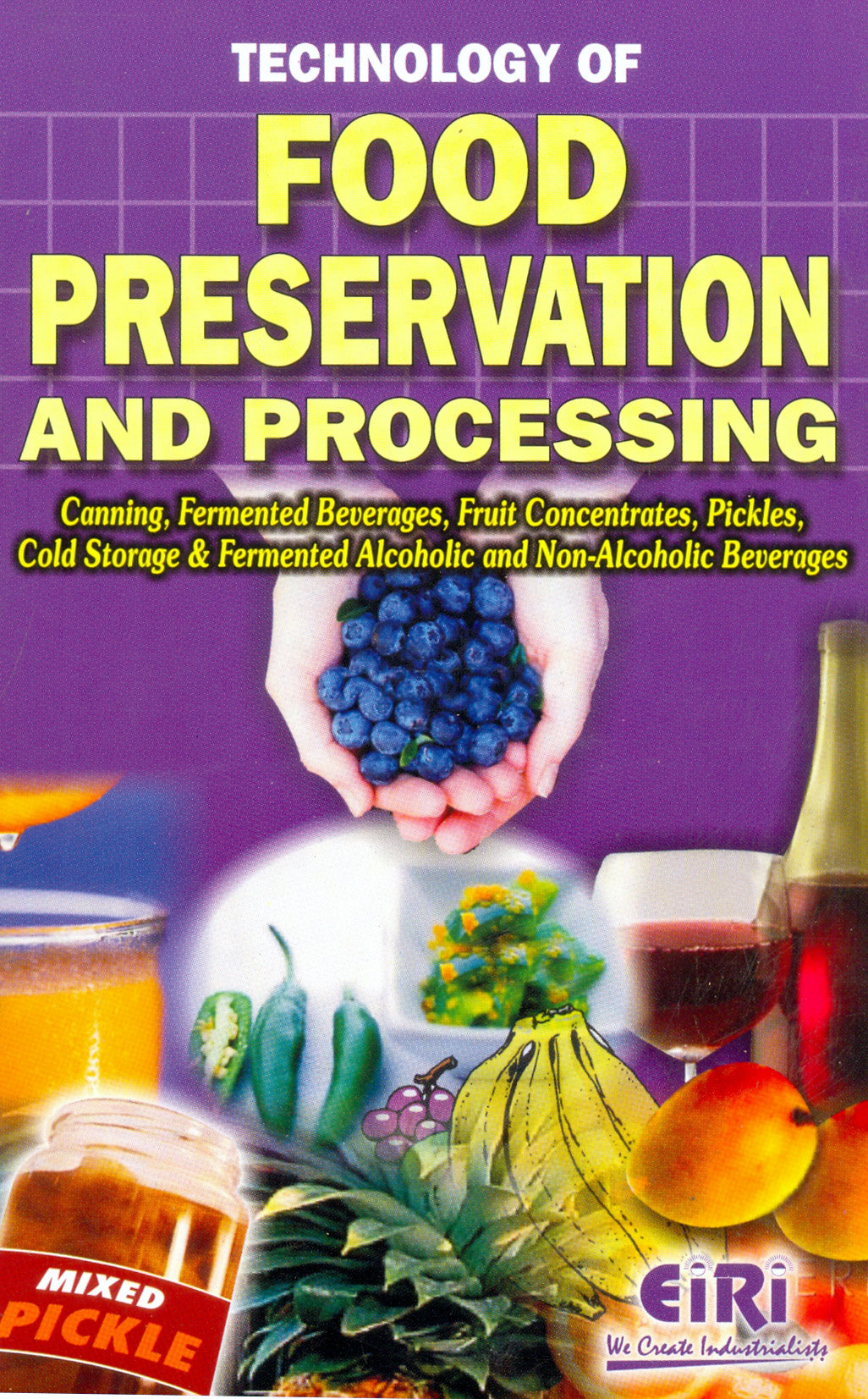
Technology Of Food Preservation And Processing (Canning, Fermented Beverages, Fruit Concentrates, Pickles, Cold Storage, Alcoholic Beverages, Non Alcoholic Beverages) (Hand Book)
Technology Of Food Preservation And Processing (Canning, Fermented Beverages, Fruit Concentrates, Pickles, Cold Storage, Alcoholic Beverages, Non Alcoholic Beverages) (Hand Book)
Couldn't load pickup availability
Technology of Food Preservation and Processing (Canning, Fermented Beverages, Fruit Concentrates, Pickles, Cold Storage, Alcoholic Beverages, Non Alcoholic Beverages) (Engineers India Research Institute, ISBN 9788186732915) is a comprehensive preservation reference covering every major method, commodity group and product class, with plant sanitation, quality control, food law and three costed project profiles.
Preservation sections cover the principles behind temporary and permanent preservation and then each method in its own right: salting; sugar with syrup strength testing, jams, jellies, marmalades, preserves, fruit leather and candied fruits, plus pectin composition and jelly grade; chemical preservatives including benzoates, parabens, sorbates, propionates, sulphites and nitrites; drying by sun and by mechanical dehydration across cabinet, tunnel, kiln, spray, foam mat, drum and freeze driers; fermentation with microbial roles and controls; irradiation; cold preservation with chilling, modified atmosphere and freezing; concentration by evaporator type, freeze concentration and reverse osmosis; and heat with thermal death time and process calculation.
Canning sections cover commercial practice from investment, factory site, building and labour through sorting, washing, hand, machine, heat and lye peeling, blanching, filling, syruping and brining, exhausting, sealing, processing, cooling and defect testing, with altitude and acidity effects on process schedules, followed by canning procedures for apple, mango, orange, papaya, pineapple, peach and pear and for okra, mushroom, peas, cabbage, pumpkin, beans, potato and carrot.
Product sections cover fruit juices, squashes, cordials and carbonated beverages with extraction presses, deaeration, fining and pasteurisation; tomato juice, puree, paste, ketchup and sauce; pickles with salting, brine fermentation and spoilage control; candied fruits; cereals and baked products; sugars and sweeteners; milk, meat, seafood, poultry and egg products; and fermented beverages across grape wine, beer, cider, vinegar, tea, coffee, cocoa and distilled spirits. Supporting sections cover food additives, spoilage organisms, food safety, plant sanitation, quality control laboratory design, product development and marketing, food grades, standards and Indian food law, by-product utilisation, packaging materials, post harvest conservation and preservation equipment.
Frequently Asked Questions
What does the Technology of Food Preservation and Processing handbook cover?
Technology of Food Preservation and Processing (EIRI, ISBN 9788186732915) covers food preservation from first principles through to costed plant projects. Its main divisions are: food additives, spoilage organisms and food safety with naturally occurring toxicants; sanitation and cleaning for food processing plants; quality control, evaluation and assurance with laboratory design; product development and marketing of new foods; food grades, standards, laws and regulations; preservation principles and methods; preservation by salting, sugar, chemicals, drying, fermentation, irradiation, cold, concentration and heat; commercial canning; fruit and vegetable preservation; fermented beverages including wine, beer and vinegar; fruit concentrates with jams, jellies and marmalades; fruit beverages, squashes and cordials; tomato products; pickles; cold storage; food standards and labelling; canning of named fruits and vegetables; cereals and baked products; sugars and sweeteners; milk, meat, seafood, poultry and egg products; candied foods; alcoholic and non-alcoholic beverages; by-product utilisation; packaging materials; preservation equipment; and three project profiles with financial analysis.
Who is this food preservation handbook written for?
This handbook is written for readers who need the full preservation toolkit in one volume. Its intended audience includes food processing plant managers and production engineers, canning and bottling unit operators, quality control and quality assurance staff setting up a laboratory, food technologists and product development teams, cold storage operators and refrigeration engineers, fruit and vegetable preservation unit owners, beverage, winery and vinegar producers, pickle, jam and sauce manufacturers, food safety and regulatory affairs personnel, teachers and students of food technology, food science, home science and catering, technical libraries and agricultural universities, and entrepreneurs or consultants preparing a project report for a food preservation unit.
What preservation methods does the book cover?
Every major preservation route is covered as a chapter of its own, which is the core strength of this book. Heat content covers factors affecting heat resistance, the time temperature relationship, thermal death time determination, heating foods in containers, plotting heating and cooling data, calculating heating rates, conduction heating products and the design and evaluation of sterilisation processes. Cold content covers chill storage, production of low temperature, air circulation and humidity, modified atmosphere, changes during freezing and thawing, and quick, slow, air, indirect contact and immersion freezing. Drying content covers sun drying by fruit, mechanical dehydration across direct and indirect heated, cabinet, tunnel, kiln, spray, air lift, foam mat, drum and freeze driers, parallel and counter current systems, accelerated freeze drying, dehydrofreezing, vacuum puffing and the heat and mass transfer theory behind each. Further methods covered are salting, preservation by sugar, chemical preservatives, fermentation with its controls and benefits, antibiotics and irradiation, and concentration by evaporator type, freeze concentration, ultrafiltration and reverse osmosis.
What canning content does the book include?
Canning is covered as a complete commercial discipline. Plant content covers investment, factory site selection, factory building, water supply and drainage, labour and machinery and equipment. Line content covers sorting and grading, washing, peeling, coring and pitting by hand, machine, heat and lye, blanching, can filling, syruping and brining, lidding and clinching, exhausting, sealing, processing, cooling, testing for defects and labelling, storing and packing. Process design content covers heat penetration in the can, processing methods for non-acid vegetables, the effect of altitude on processing time, pressure and temperature, the effect of acidity on sterilisation across medium acid and acid pH bands, and the effect of processing on strain in the can. Product content gives canning procedures step by step for apples, mangoes, oranges, papaya, pineapple with crushed pineapple and by-products, peaches for both clingstone and freestone varieties, and pears, together with okra, mushrooms, peas, cabbage, pumpkin, beans, potatoes and carrots.
What jam, jelly, pickle and fruit concentrate content does the book include?
Preserve manufacture is covered in unusual depth, including the science of why a batch fails. Jelly content covers pectin determination by alcohol and jelmeter tests, extraction of pectin, the effect of heat on pectin, pectin requirement, four theories of jelly formation, sugar concentration and acidity, quantity of sugar to add, cooking, foaming, packing, sealing and sterilisation, and the causes of failure to set, cloudy jellies, crystal formation and syneresis. Jam content covers quality attributes, fruit preparation, addition of sugar, acid, colour and flavour, boiling, end point, storage, and the causes of crystallisation, gummy jam, premature setting, surface graining and microbial spoilage. Marmalade content covers jelly and jam marmalades with peel shred preparation, cooking, flavouring and darkening. Further content covers preserves, fruit butter, fruit leather, fruit toffee, guava cheese, moramba, candied fruits and peels, jelly crystals and tomato paste, ketchup and sauce. Pickle content covers the role of salt, vinegar and lactic acid, raw material and hardening agents, equipment, dry salting, fermentation in brine, and the causes of spoilage including scum formation, cloudiness and blemishes.
What beverage content does the book cover?
Beverages receive several chapters covering fermented, alcoholic and non-alcoholic products. Juice content covers equipment including washing, sorting, halving and turning machines, continuous screw expeller, plunger, roller, basket and rack and cloth presses, straining, filtration, deaerator and flash pasteuriser, with juice extraction, fining agents, enzymes, clarification by freezing and heating, and pasteurisation by bottle, holding and overflow methods. Product content covers apple, grape, orange, grapefruit, lemon, tomato and cashew apple juices, cider, lime, lemon, orange, grapefruit, jaman, mango, peach, phalsa, pineapple, plum, jackfruit and sapota squashes, lime juice cordial, sherbet, syrups and carbonated soft drinks with their ingredients. Fermented content covers grape wine with raw material, fermentation, maturing and packing, malt beverages and beer with malting, mashing, ageing and finishing, and vinegar with quality standards, anaerobic and acetic acid fermentation, the Orleans and quick methods, ageing, clarification, pasteurisation, types and uses. Further content covers tea including black, green and oolong processing, instant and iced tea, coffee with roasting and the main brewing methods, chicory, cocoa and chocolate, and distilled spirits.
What quality control, food safety and standards content does the book cover?
Quality and compliance are treated as plant functions, which makes this book useful well beyond the production floor. Quality control content covers standards for quality, legal standards, subjective, objective and microscopic methods of determining quality, the factors affecting quality from cultivar and maturity through cultural practices, harvesting and handling to shelf life, and the fundamentals of a quality control programme with an organisation plan, personnel, standards and specifications, measurements and a laboratory layout covering the grading table, analytical bench, taste panel table, microbiological and physical testing table and basic equipment. Safety content covers spoilage by moulds, yeasts, bacteria, enzymes and insects, bacterial growth and how to reduce it, food poisoning and infection organisms, and naturally occurring toxicants in foods. Sanitation content covers the value of plant sanitation, plant interior and equipment, water supply, rodent and insect control, detergent function, cleaning chemicals, sanitizers, standards of cleanliness and the clean up crew. Regulatory content covers types of standards, the degree of standardisation, binding force, fields of application, development of grades, and Indian food standards and labelling including the Prevention of Food Adulteration Act, Fruit Products Order, Agmark, Bureau of Indian Standards, Consumer Protection Act and Export Inspection Council, with FPO and ISI marking.
Who should consider starting a food preservation business, and why?
Food preservation suits entrants who can source fruit, vegetables or milk close to production and want to sell a shelf stable product all year. The commercial case rests on the gap between harvest and consumption: produce is cheap and abundant for a few weeks and scarce for the rest of the year, and preservation captures that difference as margin. This book supports three costed entry routes, each with market potential, basis and presumptions, implementation schedule, technical aspects, process of manufacture, production capacity, motive power, pollution control, energy conservation, quality control and standards, and financial aspects covering fixed capital, machinery and equipment, monthly working capital, raw materials, utilities, contingent expenses, total capital investment and financial analysis. The profiles are a cold storage unit, which earns from storing other people's produce rather than buying it; ready to serve curried vegetables, which sells convenience at retail and institutional level; and tomato products covering juice, puree and ketchup, with a recipe for the final product and machinery utilisation. Alongside these, the chapter on product development and marketing covers new food development strategy and domestic, industrial, institutional, retail and international market routes, and a list of plant and machinery suppliers closes the book, so an entrant can move from method to specification to supplier within one volume.
Share