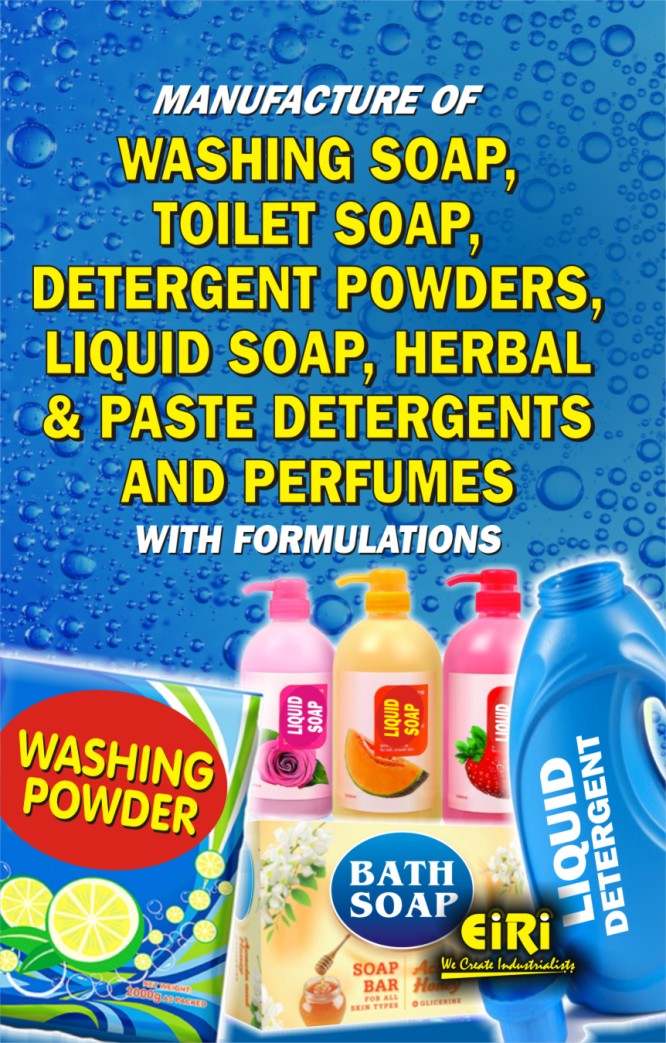
Manufacture Of Washing Soap, Toilet Soap, Detergent Powders, Liquid Soap & Herbal Detergents And Perfumes With Formulations (Hand Book)
Manufacture Of Washing Soap, Toilet Soap, Detergent Powders, Liquid Soap & Herbal Detergents And Perfumes With Formulations (Hand Book)
Couldn't load pickup availability
Manufacture of Washing Soap, Toilet Soap, Detergent Powders, Liquid Soap & Herbal Detergents and Perfumes with Formulations (Engineers India Research Institute, ISBN 9789380772530) is a large working formulary covering the whole soap and detergent range together with the perfumery that goes into it.
Raw material sections cover the classification of fats and oils with coconut, palm, palm kernel, cottonseed, groundnut, castor, rice bran, olive, tall, babassu, mahua and fish oils, tallow, lard and hydrogenated oils, purification by alkali refining, acid washing and bleaching, soap fat testing, and non fatty materials covering alkalies, builders, stabilisers, antioxidants, foam producers, fillers, solvents, clarifiers and colouring matter with colour lists, alongside fixatives, essential oils, isolates and synthetic odorants.
Soap sections cover production by full boiled, semi boiled and cold made processes with glycerine recovery and jet saponification, cake soap and washing bar manufacture, and toilet soap manufacturing through band, tubular and flash drying, ingredient mixing, colours and the colour index, opacifiers, optical brighteners, superfatting agents and structurants, with double helical mixers, refiners and three roll mills, plodding, stamping with die making, and wrapping. Specialty sections cover transparent and winter soap, translucent coconut oil soap, floating soap with the aeration process, superfatted and fancy soaps, carbolic soap, abrasive cleaners and syndet toilet bars.
Detergent sections cover powder manufacture by simple absorption, combined absorption and neutralisation, dry mixing and spray drying with tower operating conditions, particle size, bulk density, residual moisture and drum drying, with heavy duty household washing powder formulations. Liquid and paste sections cover surfactant requisites, builders, viscosity controllers and formulations for heavy duty, light duty, controlled foam, dishwashing, lotion and clear liquid detergents, detergent pastes, metal degreasing, textile scouring and degumming pastes, rug cleaners, liquid and soft soaps and shampoos. Perfume sections cover formulae by floral and fantasy type and the perfuming of soap, detergents, disinfectants and cosmetics, with closing sections on oil and fat testing and on packaging under the Packaged Commodities Rules.
Frequently Asked Questions
What does the Manufacture of Washing Soap, Toilet Soap and Detergent Powders handbook cover?
Manufacture of Washing Soap, Toilet Soap, Detergent Powders, Liquid Soap and Herbal Detergents and Perfumes with Formulations (EIRI, ISBN 9789380772530) covers soap, detergent and perfume manufacture in one formulary. Its main divisions are: raw materials for soap covering fats, oils, alkalies, builders, additives and colours; abrasive cleaners; formulations for toilet soap manufacture; fabric softeners; formulations of perfumes; fragrance manufacture with formulae; liquid soap and soft soap; liquid detergents; liquid and paste detergents including herbal types; medicated soap manufacturing; production of soap by the boiling process; production of cake soap and washing bar with glycerine recovery; paste detergents; perfume manufacture by floral and fantasy type; perfumes used in soap, detergents, disinfectants and cosmetics; soap by the semi boiling and cold made processes; solid and syndet detergents; toilet soap manufacturing with plant and finishing equipment; translucent and floating soap manufacture; toilet preparations including shampoos; a large section of further soap formulations; detergent powder manufacture including spray drying; testing and analysis of oils and fats; and packaging of detergent powder and bars.
Who is this soap and detergent handbook written for?
This handbook is written for readers who need formulae they can take straight to the mixing pan. Its intended audience includes soap and detergent manufacturers, formulation chemists developing a toilet soap, washing bar or powder range, small scale and cottage sector soap makers working by the cold made and semi boiled processes, detergent powder and liquid detergent producers, herbal and natural personal care manufacturers, perfumery and fragrance compounders supplying the soap and detergent trade, production and quality control staff, oil and fat traders supplying soap makers, contract manufacturers and private label producers, students of industrial and oil chemistry, technical libraries, and entrepreneurs or consultants assessing a soap or detergent venture.
Does the book include actual formulations?
Yes, and the formulary is the substance of the book, with most formulations followed by their manufacturing process. Toilet soap formulations cover oriental, superfatted, fancy, bouquet, rose, sandal, musk, almond, amla, khas, carbolic, transparent and winter types with matching perfume mixtures and grades from premium to economy. Further soap formulations cover neem, camphor, naphthalene, iodine, borax bath, borax soap powder, borax dry, surgical, germicidal, honey, hyacinth, jasmine, lily, lavender, violet, khas, acacia from both essential oils and synthetics, amber, cedarwood, carnation, chypre, cologne, heliotrope, palm and olive, perfumery and herbal soaps. Washing soap formulations cover household washing bars, good, medium, cheaper and minimum quality grades, cold process and semi boiled bars, cottonseed oil residue bars, soap stone and sodium silicate loaded bars, and bar soaps across several quality classes, each with its process. Detergent formulations cover heavy and light duty powders, liquid detergents for laundry and dishwashing, clear and lotion types, controlled foam grades, forty and twenty per cent pastes, metal degreasing and textile scouring and degumming pastes, rug cleaners, syndet bars and scrub bars. Liquid soap, soft soap with soda and castor oil variants, cream, liquid and pearlescent shampoos and fabric softeners are also given with formulae and process.
Who should consider starting a soap or detergent business, and why?
Soap and detergent manufacture suits entrants looking for a consumable product with daily demand and a very wide choice of entry scale, which is why it remains one of the most common first ventures in the chemical trade. The commercial case rests on four points. Demand is universal and repeat: every household and institution buys washing soap, bathing soap and detergent every month, through good years and bad. The cold made and semi boiled processes let a unit start with pans, a mixer and moulds rather than a plant, and this book covers the cottage and small scale equipment for exactly that route, so capital can be matched to a local market before scaling up. Product range comes free with the process, because the same kettle, mixer and plodder that make a washing bar will make toilet soap, neem soap, carbolic soap and a scrub bar simply by changing the formula, and the formulary here supplies dozens of those formulas at several quality and price grades. Margin improves with positioning, since herbal, neem, transparent, floating and perfumed toilet soaps all command better realisation than a plain bar while using the same plant. The book also covers the perfumery that distinguishes one brand from another, the testing needed to hold quality batch to batch, and packaging under the Packaged Commodities Rules, so an entrant can take a product from formula to a legally labelled pack.
What toilet soap manufacturing content does the book include?
Toilet soap is covered as a full production line, which is the part most formularies leave out. Drying content covers the band dryer, tubular dryer and flash drying methods. Additive content covers the mixing of ingredients into soap, preservatives, the perfumes used in toilet soap, colour types with the colour index and the rules governing colour use, opacifiers, optical brighteners, superfatting agents, structurants, bactericides and germicides, and other additives. Equipment content covers the double helical mixer, the structure of refiners and mills including the three roll mill, plodding, and stamping machines with the causes of stamping problems and the making of dies to a quality requirement. Finishing content covers wrapping materials, the wrapping machine and the packing process. Specialty manufacture content covers transparent soap in both power and non power sector routes, winter soap, translucent coconut oil soap, and floating soap with the aeration process and two formulations. Grade content runs from premium white and superfatted soaps down to economy grades, with the formula, perfume mixture and process given at each level.
What washing soap, detergent powder and packaging content does the book include?
Washing products are covered from the kettle to the carton. Soap content covers production by the full boiled process, the semi boiled and cold made processes used in the cottage and small scale sector with the equipment each needs, the physical appearance of cold made product and the remedies for its defects, jet saponification, cake soap and washing bar manufacture, and the recovery of glycerine as a by-product, which is a saleable second output from the same batch. Detergent powder content covers manufacture by simple absorption, by combined absorption and neutralisation, by dry mixing and by spray drying, with heavy duty household powder formulations at full and reduced sulphonic acid levels, and spray drying control covering colour, particle size, bulk density, residual moisture, tower operating conditions, stickiness, product uniformity, powder separation, wet scrubbing, the use of fines, combinations of spray dried and dry mixed powder and drum drying. Testing content covers moisture, free fatty acids, impurities, unsaponifiable matter, titre, iodine number, saponification number, melting point, acid number, acetyl value, specific gravity and rancidity. Packaging content covers the Packaged Commodities Rules with the declarations required on every package, permitted pack quantities, cartons, paper and poly sachets, polythene bags and detergent bar packaging, with physical tests for substance, dimensions, bursting strength, compression resistance, tensile strength, scuff resistance, moisture, alkali stability, flap stability, water absorption, board stiffness and machine direction.
What liquid, paste and herbal detergent content does the book include?
Liquid and paste products are covered as a formulation discipline with the reasoning behind each ingredient. Framework content covers the requisites of surfactants for formulating liquid detergents, the surfactants most commonly used, builders, viscosity controllers and other ingredients, which is what allows a formulator to adjust a given recipe rather than only copy it. Household content covers heavy duty liquid detergents including a controlled foam version, light duty detergents for silk and wool, light duty clear liquids and lotion types, household liquid cleaners and light duty liquids for dishwashing. Industrial content covers metal degreasing liquid detergent, a general purpose solvent based detergent, textile scouring paste and textile degumming detergent paste, and low foaming liquid detergents for machine use. Paste content covers the manufacture of paste detergents with forty per cent and twenty per cent formulations and calcium sulphonate pastes. Herbal content covers liquid and paste detergents on a herbal basis, a positioning that carries a premium in both domestic and export markets. Personal care content covers liquid shampoos in typical and opaque viscous forms, cream shampoo and pearlescent shampoo with their processes, and rug cleaning liquid detergent formulations.
What perfume and fragrance content does the book include?
Perfumery runs through the book as a subject in its own right, which is unusual in a soap formulary and valuable because fragrance is what a buyer notices first. Floral formulae cover rose in four variants, jasmine in five, orange flower and neroli, violet in four, carnation bases, fougère, gardenia, hyacinth, lilac, lily of the valley, linden, reseda, narcissus, opopanax, sweet pea, syringa, clover, tuberose, verbena and ylang-ylang, with notes on acacia, broom, cyclamen, hawthorn, heliotrope, honeysuckle, iris, magnolia, mimosa, nardo, new mown hay, nicotiana, orchid, pansy, peony, phlox, wallflower and wistaria. Type formulae cover aldehydic, chypre, oriental, green, woody, leather, dominant note and ambergris note perfumes, with toilet waters, modified colognes, perfumes for men and lavender compositions, alongside manufacturing process, alcoholic strengths and control. Application content covers perfumes for soaps with the factors influencing soap perfuming, the ester, alcohol, ketone, aldehyde and acetal classes used, soap perfumery fashions, the perfuming of synthetic detergents, the stability of perfumery chemicals, perfumed disinfectants, air perfuming, incense and fumigants, perfumed candles, paints and polishes, the perfuming of creams, powders, lipstick, nail lacquer, hair preparations and aerosols, industrial perfumes, perfumes for textiles, perfumed ink and paper, the masking of malodours, agricultural uses and perfumed insecticides.
Share