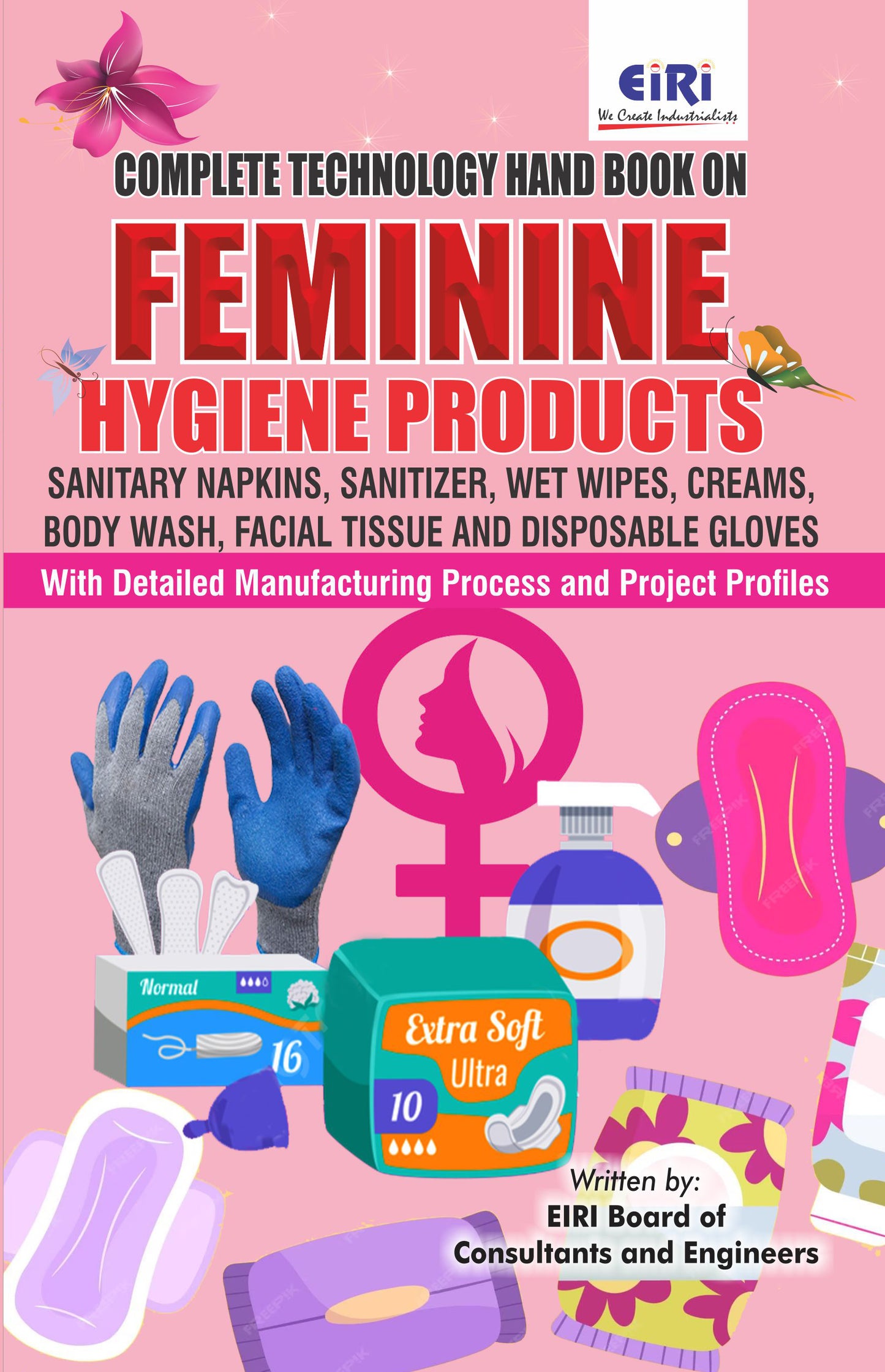
Complete Technology Handbook On Feminine Hygiene Products (Sanitary Napkins, Sanitizer, Wet Wipes, Creams, Body Wash, Facial Tissue And Disposable Gloves) With Detailed Manufacturing Process And Project Profiles
Complete Technology Handbook On Feminine Hygiene Products (Sanitary Napkins, Sanitizer, Wet Wipes, Creams, Body Wash, Facial Tissue And Disposable Gloves) With Detailed Manufacturing Process And Project Profiles
Couldn't load pickup availability
Complete Technology Handbook on Feminine Hygiene Products (Sanitary Napkins, Sanitizer, Wet Wipes, Creams, Body Wash, Facial Tissue and Disposable Gloves) with Detailed Manufacturing Process and Project Profiles (Engineers India Research Institute, ISBN 9788189765811) covers personal hygiene product manufacture across 38 chapters.
Menstrual product chapters cover the full range of formats and their production: sanitary napkin manufacture from cotton opening, scutching, carding and draw frame through sliver preparation, knitting, cutting, looping, pressing, sealing, gumming and UV sterilisation, with machine descriptions; pantyliner production covering fluff formation and core building; menstrual cup manufacture by silicone injection moulding with mould creation, trimming, inspection and sterilisation; tampon manufacture with raw materials, applicator, absorbency ranges, component materials and regulatory testing requirements; and cloth pads, menstrual discs and sponges with use and care guidance.
Cleansing and personal care chapters cover body wash surfactant systems including glycinate chemistry with cleansing and moisturisation efficacy testing, herbal soap formulations for neem, rose and almond variants, paper soap, shampoo across powder, liquid, lotion, cream, jelly, conditioning, two-layer, baby, anti-dandruff and herbal types, hand sanitizer using WHO ethanol and isopropanol formulations with filling and capping, intimate care wash formulation, deodorants and antiperspirants with numbered formulae for creams, sprays, sticks, roll-ons, pumps and aerosols, depilatory and epilatory hair removal products, sunscreens with UV filter classification and SPF and UPF indices, medicated body and talcum powders, and lip balms.
Further chapters cover toothpaste and mouthwash including herbal and polyherbal formulations, toothbrush and dental floss manufacture, wet wipes and facial cleansing cloths, tissue and toilet paper from recycled stock, women's razors, nail cutters and disposable latex, nitrile and vinyl gloves, closing with plant economics for seven projects.
Frequently Asked Questions
What does the Complete Technology Handbook on Feminine Hygiene Products cover?
The Complete Technology Handbook on Feminine Hygiene Products (EIRI, ISBN 9788189765811) covers manufacture across the personal hygiene category. Its main divisions are: menstrual products including sanitary napkins, pantyliners, tampons, menstrual cups, discs, sponges and cloth pads; cleansing products including body wash, herbal soaps, shampoos, hand sanitizer and intimate wash; oral care including toothpaste, mouthwash, toothbrushes and dental floss; skin products including deodorants, sunscreens, body powders, lip balms and depilatories; paper products including wet wipes, facial tissue and toilet paper; disposable gloves and razors; and plant economics for seven manufacturing projects.
Who is this feminine hygiene products handbook written for?
This handbook is written for readers who need manufacturing process and machinery detail rather than consumer guidance. Its intended audience includes personal care and hygiene product manufacturers, formulation chemists working on cleansers, deodorants and oral care, entrepreneurs and self-help groups setting up sanitary napkin or wet wipe units, non-profit and development organisations working on menstrual hygiene access, students of cosmetic and paper technology, technical libraries, and consultants preparing project reports.
Who should consider starting a sanitary napkin or hygiene product manufacturing unit, and why?
Sanitary napkin manufacture is one of the more accessible manufacturing entries in India and suits entrepreneurs, self-help groups and rural enterprises as well as conventional investors. The reasons are specific: semi-automatic napkin lines are available at low capital compared with most manufacturing, the process is assembly and converting rather than chemistry, demand is non-discretionary and repeat, and the category attracts government and CSR support because access to menstrual products is a recognised public health priority. Adjacent products in this book — wet wipes, tissue, hand sanitizer, liquid soap — run on similar converting or blending equipment, so a unit can broaden its range without a second plant. The constraints deserve attention before committing: raw materials including fluff pulp, SAP, non-woven top sheet and release paper are largely bought in and price-sensitive; national brands dominate retail shelves, so most small units succeed through institutional supply, government tenders, schools and local distribution rather than modern trade; and quality consistency, sterilisation and packaging integrity determine whether repeat orders follow. Tax treatment of sanitary napkins in India has changed in recent years and affects input credit, so current GST position should be confirmed with a practitioner.
Does the book explain how sanitary napkins are manufactured?
Yes, in production sequence. Coverage begins with cotton lint sliver preparation through opening, scutching or lapping, carding and draw frame, followed by tissue paper wrapping. Napkin manufacture then covers cone winding, knitting and insertion of the tissue-wrapped sliver, cutting and looping of both ends, and packing. A separate section describes the automated process with machine-by-machine detail covering the pulveriser, napkin press, sealing machine, gumming set and UV treated steriliser. A plant economics chapter gives project costs for a biodegradable sanitary napkin unit.
What other menstrual products does the book cover?
Beyond disposable napkins, the book covers the main reusable and internal formats. Menstrual cup manufacture is described in eight stages from material preparation and mould creation through silicone injection moulding, trimming, inspection, cleaning and sterilisation to packaging. Tampon coverage includes component materials and additives, design and dimensions, absorbency ranges, applicator formation, preclinical toxicology and microbiology requirements, performance testing and packaging. Pantyliner manufacture covers raw material collection, fluff formation and core building with automatic machinery. Cloth pads, menstrual discs and menstrual sponges are covered with materials, use, care and cleaning.
Does the book include hand sanitizer and disinfectant wipe manufacturing?
Yes. Hand sanitizer coverage includes active and inactive ingredients, both World Health Organization reference formulations, ethanol-based and isopropanol-based formulation tables, foam sanitizer variants, the mixing and production process, and packaging through filling, capping, labelling and sealing, with machinery supplier information. Wet wipe chapters cover non-woven substrate preparation, cleansing formulation, non-woven treatment and packaging operations, along with facial cleansing cloth types and production line flow. Plant economics chapters give project costs for an alcohol-based hand sanitizer unit and a non-woven wet wipes unit.
What plant economics and project cost data does the book provide?
Seven chapters give plant economics, each covering land and building, plant and machinery, fixed capital, monthly working capital requirement, total capital investment and annual turnover. The projects covered are: an alcohol-based hand sanitizer manufacturing unit; non-alcoholic deodorant perfume spray, with aerosol filling method and numbered formulations; face cream and body cream; non-woven wet wipes; a biodegradable sanitary napkin manufacturing unit; tissue paper from waste paper; and toilet paper and napkin production.
Does the book cover oral care and skin care products as well?
Yes. Oral care chapters cover toothpaste ingredient functions across abrasives, binders, humectants, foaming agents, anti-caries, anti-plaque, anti-calculus, sensitivity and whitening actives, with formulations including neem, ginger and polyherbal variants, plus mouthwash types, herbal mouthwash formulations, toothbrush manufacture through handle moulding, bristle filling and trimming, and dental floss types. Skin care chapters cover sunscreen and sunblock with UV filter classification, organic and inorganic filters, SPF and UPF grading and formulation strategy; deodorants and antiperspirants across all delivery formats; medicated and talcum body powders; lip balm production; and chemical depilatories including thioglycolate, sulfide and enzyme systems with epilating waxes.
Share