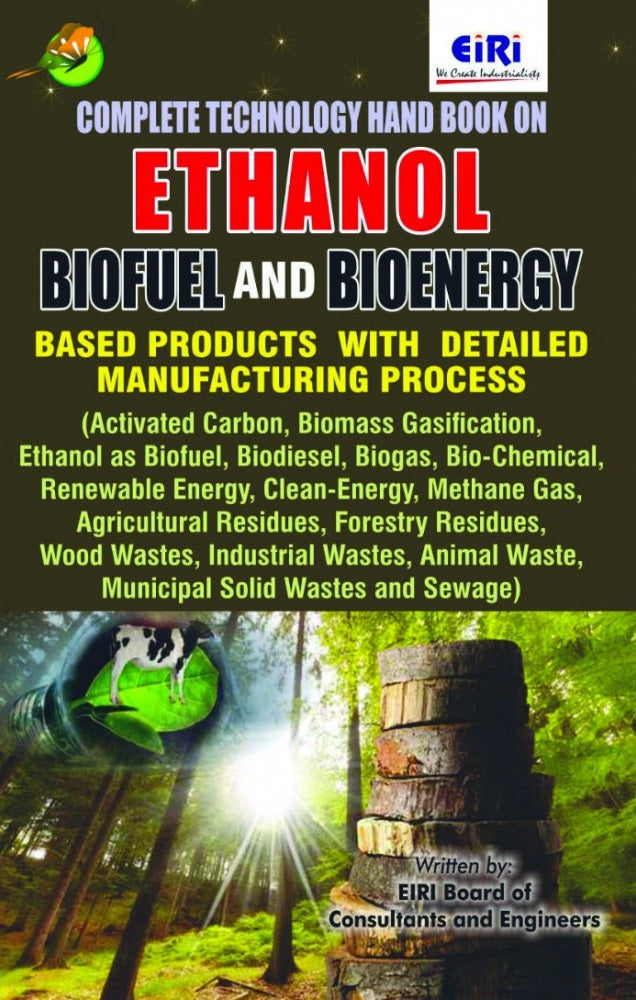
Complete Technology Handbook On Ethanol, Biofuel And Bioenergy Based Products With Detailed Manufacturing Process (Activated Carbon, Ethanol As Biofuel, Biodiesel, Biogas, Bio-Chemical, Renewable Energy, Wood Wastes, Industrial Wastes)
Complete Technology Handbook On Ethanol, Biofuel And Bioenergy Based Products With Detailed Manufacturing Process (Activated Carbon, Ethanol As Biofuel, Biodiesel, Biogas, Bio-Chemical, Renewable Energy, Wood Wastes, Industrial Wastes)
Couldn't load pickup availability
Complete Technology Handbook on Ethanol, Biofuel and Bioenergy Based Products with Detailed Manufacturing Process (Activated Carbon, Ethanol as Biofuel, Biodiesel, Biogas, Bio-Chemical, Renewable Energy, Wood Wastes, Industrial Wastes) (Engineers India Research Institute) covers biofuel and bioenergy production from feedstock through conversion to costed projects.
Ethanol sections cover production from sugar, starch and cellulosic feedstocks, the sugarcane route through cane reception and preparation, sugar extraction, juice treatment and concentration, fermentation, distillation and downstream processing with vinasse and biogas recovery and combined heat and power, and the grain route through liquefaction, fermentation, distillation and distillers dried grains with solubles. Dehydration is covered separately through heterogeneous azeotropic distillation, extractive distillation and molecular sieve adsorption, alongside second generation ethanol from bagasse and cellulosic material.
Pretreatment of lignocellulosic biomass is treated in depth across physical methods including milling, microwave, extrusion and pulsed electric field; chemical methods including dilute acid, alkali, organosolv, ionic liquids and ozonolysis; physicochemical methods including ammonia fibre expansion, steam explosion, carbon dioxide explosion, liquid hot water and wet oxidation; and biological pretreatment.
Further sections cover biofuel conversion through high and low temperature deconstruction and upgrading, biomass crops and Indian feedstock availability for heat, power, ethanol and biodiesel, biomass properties including moisture, calorific value, ash and alkali metal content and cellulose to lignin ratio, biomass briquette densification with compaction mechanisms, equipment and calorific values by raw material, biomass gasification across entrained flow, fluidised and moving bed reactors with updraft, downdraft and crossdraft designs, biomass-derived chemicals including methanol and acetone-butanol-ethanol fermentation, biomass-based activated carbon, reuse of wood biomass fly ash in cement, BIS specifications and eight project profiles.
Frequently Asked Questions
What does the Complete Technology Handbook on Ethanol, Biofuel and Bioenergy cover?
This handbook covers biofuel and bioenergy from feedstock to finished project. Its main divisions are: biofuel types and benefits; ethanol chemistry, production and applications; ethanol from sugarcane, grain, bagasse and cellulosic material; lignocellulosic pretreatment methods; biofuel conversion processes; biomass crops and feedstock availability in India; biomass briquetting and densification; biomass renewable energy and feedstock properties; biomass-based activated carbon; biomass-derived chemicals including methanol and solvent fermentation; biomass gasification; reuse of wood biomass fly ash in cement; BIS specifications; and eight project profiles with capital and turnover figures.
Who is this biofuel and bioenergy handbook written for?
This handbook is written for readers assessing or operating bioenergy ventures. Its intended audience includes distillery and ethanol plant staff, biomass briquetting and pelletising operators, biogas and biodiesel plant developers, sugar mill technical teams evaluating cogeneration and second generation ethanol, renewable energy consultants, students of energy and chemical engineering, technical libraries, and entrepreneurs preparing project reports for a bioenergy unit.
Who should consider starting a biofuel or bioenergy business, and why?
The entry points differ sharply in capital and regulation, and that distinction decides the right answer. Biomass briquetting and pelletising is the most accessible: equipment cost is modest, feedstock is agricultural residue that is otherwise burnt or dumped, and demand comes from industrial boilers substituting coal. Biogas, including compressed biogas, sits in the middle and benefits from government programmes supporting cleaner fuel. Fuel ethanol is capital-intensive and heavily regulated, since distillation is governed by state excise law alongside the approvals specific to fuel-grade production, but it has unusually visible demand support from India's petrol blending programme, which has given distillers a defined buyer and a policy-backed volume. Biodiesel depends on feedstock economics, which is the historic constraint on the sector in India. The common constraints are worth stating: feedstock supply is seasonal and geographically dispersed, so plants must be sited near the residue rather than near the customer; low bulk density makes transport cost decisive for briquetting; conversion yields determine whether a project works at all; and effluent handling, particularly distillery spent wash, is a serious compliance obligation requiring proper design.
Does the book explain ethanol production in detail?
Yes, across several feedstock routes. Sugarcane content covers cane reception and preparation, sugar extraction, cogeneration, juice treatment and concentration, fermentation, distillation, downstream processing, vinasse and biogas recovery, and combined heat and power, with a comparison between second generation ethanol and cogeneration as competing uses for bagasse. Grain content covers liquefaction, fermentation, distillation and distillers dried grains with solubles as a by-product revenue stream. Cellulosic content covers the process route from pretreatment through distillation and dehydration. Dehydration to fuel grade is covered separately through azeotropic distillation with an entrainer, extractive distillation using glycol and adsorption on molecular sieves.
What biomass pretreatment methods does the book cover?
Pretreatment receives more attention than in most general bioenergy references, because it determines cellulosic conversion economics. Physical methods covered include milling, microwave treatment, mechanical extrusion, pyrolysis and pulsed electric field. Chemical methods covered include dilute acid, alkali, organosolv, ionic liquids and ozonolysis. Physicochemical methods covered include ammonia fibre expansion, steam explosion, carbon dioxide explosion, liquid hot water and wet oxidation. Biological pretreatment is covered separately. Related content on biomass pre-processing for densification covers mechanical processing, energy densification, pelletisation, fractionation, alkaline hydrolysis, co-solvent enhanced lignocellulosic fractionation, pyrolysis and torrefaction.
Does the book include project economics and cost data?
Yes. Eight project profiles give economics, each covering plant and machinery, fixed capital, monthly working capital requirement, total capital investment and annual turnover, with most also covering land and building. The projects are: activated carbon from coconut shell; bio-coal with process flow diagram; a biodiesel manufacturing plant with pretreatment detail; biogas production and bottling, covering water scrubbing and pressure swing adsorption upgrading routes; biomass briquettes from bamboo and wood chips, covering milling, chipper designs, piston and extrusion briquetting and packaging; grain based ethanol; municipal solid waste management; and pyrolysis oil from waste feedstock.
What does the book cover on biomass briquetting?
Briquetting is covered as both a technology and a business. Technical content covers briquette properties, binding mechanisms of densification, compaction mechanism, and the effect of particle size, moisture, biomass temperature, die temperature and external additives on compaction. Manufacturing content covers the bio-briquette process, bagasse and biomass briquette production, major equipment, screw briquetting machine performance characteristics, and the equipment required to build a briquetting plant including small production lines at low setup cost. Commercial content covers markets and segmentation, industrial applications, the materials a briquetting machine can process, approximate calorific values by raw material type, and the cost of setting up a plant, supported by a separate costed project profile.
What does the book cover on gasification and biomass chemicals?
Gasification content covers feedstocks, reactor types including entrained flow, fluidised bed and moving bed designs with updraft, downdraft and crossdraft gasifiers, the advantages and disadvantages of each, and the process stages of pyrolysis, cracking, reduction, combustion and drying. Biomass chemical content covers biorefinery platforms including pyrolysis oil, carbon dioxide, syngas and bio-oil routes, methanol production from biomass with feedstocks, scale, process and applications including fuel and wastewater treatment use, and fermentation routes including sugar and starch fermentation to ethanol, acetone-butanol-ethanol fermentation with process detail, and hydrogen fermentation. Thermochemical conversion is covered across combustion, carbonisation, pyrolysis, gasification and liquefaction.
Share