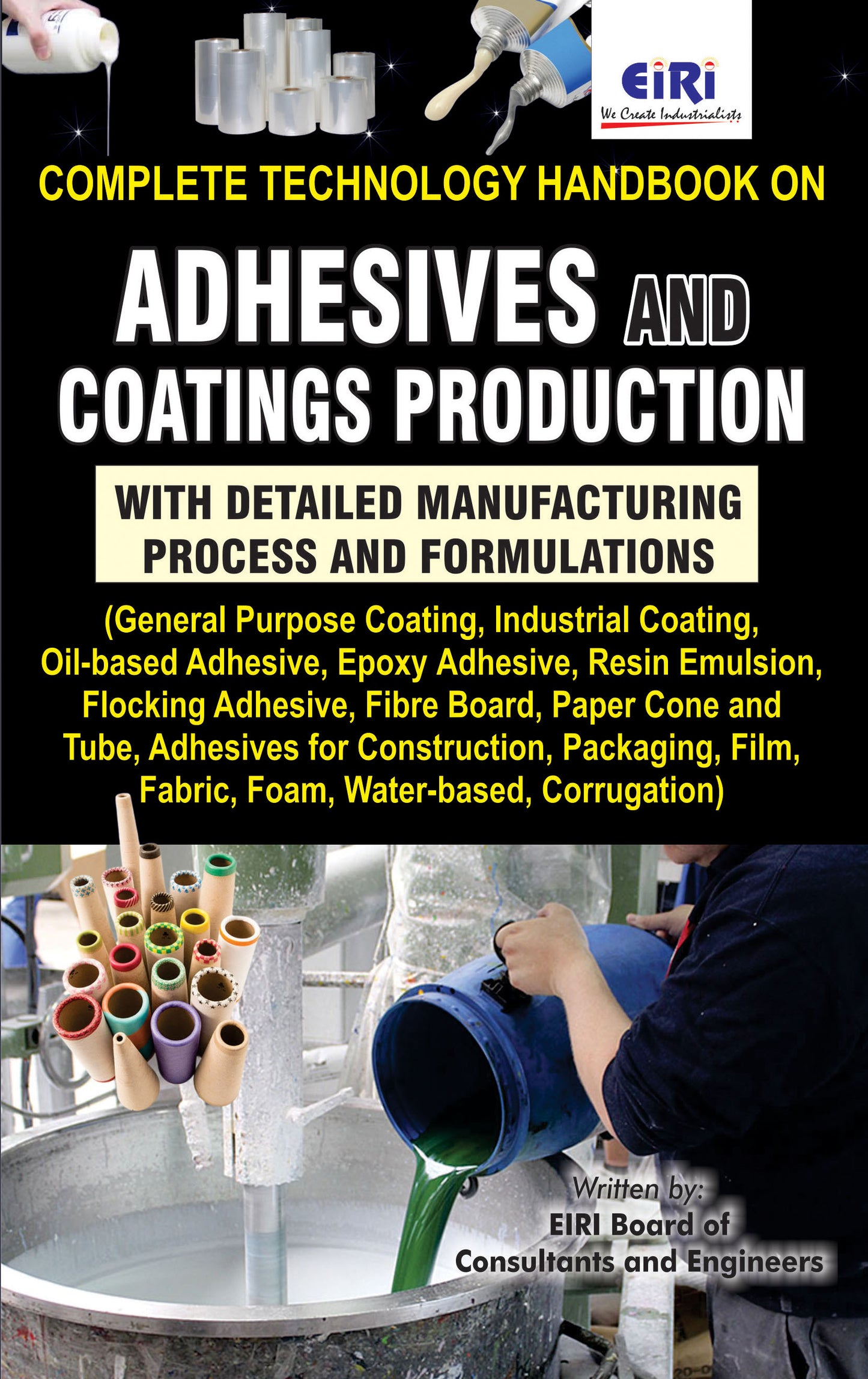
Complete Technology Handbook On Adhesives And Coatings Production With Detailed Manufacturing Process And Formulations (General Purpose Coating, Epoxy Adhesive, Resin Emulsion, Flocking Adhesive, Fibre Board, Paper Cone And Tube, Corrugation)
Complete Technology Handbook On Adhesives And Coatings Production With Detailed Manufacturing Process And Formulations (General Purpose Coating, Epoxy Adhesive, Resin Emulsion, Flocking Adhesive, Fibre Board, Paper Cone And Tube, Corrugation)
Couldn't load pickup availability
Complete Technology Handbook on Adhesives and Coatings Production with Detailed Manufacturing Process and Formulations (General Purpose Coating, Epoxy Adhesive, Resin Emulsion, Flocking Adhesive, Fibre Board, Paper Cone and Tube, Corrugation) (Engineers India Research Institute, ISBN 9788189765842) is a formulation reference for industrial adhesives and coatings, organised by application across 22 chapters.
Opening chapters establish the fundamentals: what water-based adhesives are, the differences between vegetable and starch or dextrin adhesives, animal and casein protein adhesives, polymer acetate adhesives and latex systems, together with adhesion mechanisms covering mechanical bonding, physical interaction and chemical interaction, and the classification of one-component, two-component, hot melt and reactive hot melt adhesives. Application chapters cover use in automotive, packaging, tissue and towel, leather goods and construction, with market opportunity and restraint analysis.
Construction chapters cover neoprene contact adhesives, acrylic dispersions for ceramic tile bonding, vinyl acetate-ethylene emulsions, rosin solvent systems, cellulosic and starch powder adhesives, two-component epoxies, polyurethanes, silicones, MS polymers, cement-based mortars and plaster putties, alongside surface preparation, levelling compounds, primers, humidity limits, application temperature, mixing ratio and pot life.
The bulk of the book is a formulary organised by substrate and end use, giving working formulations with polymer systems identified for each: home construction and flooring adhesives, fabric and non-woven bonding, film and laminating adhesives, flocking adhesives, foam adhesives, general purpose and laminating grades, plywood hot and cold pressing, rug backing, bag seam and bottom pastes, solid fibre, fibreboard and corrugated board adhesives, packaging and label adhesives, paper cone and tube winding adhesives, paper-to-paper grades, general purpose and industrial coatings including fire-retardant textile systems, paper and paperboard coatings, epoxy adhesives, oil-based tile adhesives, plastisols and resin emulsions for compounding.
Frequently Asked Questions
What does the Complete Technology Handbook on Adhesives and Coatings Production cover?
The Complete Technology Handbook on Adhesives and Coatings Production (EIRI, ISBN 9788189765842) covers industrial adhesive and coating formulation organised by application. Its main divisions are: water-based adhesive fundamentals and types; industrial applications and market analysis; construction adhesives and bonding chemistries; formulation chapters for home construction, fabric, film, flocking, foam, general purpose and industrial adhesives; packaging adhesives including bag seam and bottom pastes, corrugated board, paper cone and tube, and paper-to-paper grades; general purpose, industrial and paperboard coatings; and epoxy, oil-based, plastisol and resin emulsion systems.
Who is this adhesives and coatings technology handbook written for?
This handbook is written for readers who need starting formulations tied to specific substrates rather than a general introduction to adhesion science. Its intended audience includes adhesive and coating formulation chemists, technical staff in packaging, paper conversion, plywood, textile and flooring industries, production and quality control engineers, students of polymer and surface chemistry, technical libraries, and entrepreneurs or consultants assessing an adhesive manufacturing venture.
Who should consider entering the adhesives manufacturing industry, and why?
Adhesive manufacture suits entrants who can pair formulation capability with a specific customer base, because most industrial adhesive is sold business-to-business against a substrate requirement rather than to consumers. The sector rewards this approach for practical reasons: water-based adhesive production is largely mixing and dispersion rather than reaction chemistry, so plant cost is moderate; demand is tied to packaging, corrugation, plywood, footwear and construction, which gives several independent end markets; the regulatory shift away from solvent-based systems has moved demand toward water-based products; and small manufacturers can win work by tailoring a formulation to one converter's substrate and machine speed, which large suppliers often will not do. The constraints are equally clear: adhesive performance must be proven on the customer's line, so sales cycles involve trials and technical service; raw materials such as vinyl acetate monomer, acrylic emulsions and starch are commodity-priced and volatile; shelf life, freeze-thaw stability and microbial spoilage require preservative systems and proper storage; and payment terms in packaging and board supply chains can be long, which raises working capital needs.
Does the book include actual adhesive formulations?
Yes. The majority of the book consists of working formulations, each identified by the polymer system it is based on, such as vinyl acetate, vinyl acetate-acrylate, ethylene-vinyl acetate, styrene-butadiene, butadiene-acrylonitrile, vinyl chloride, acrylic, vinyl alcohol, dextrin, starch, protein and sodium silicate. Formulations are grouped by the bonding task rather than by chemistry alone, so a reader can locate an adhesive by the substrates being joined, and many entries include physical constants, key properties and formulation notes.
What packaging and paper adhesives does the book cover?
Packaging coverage is extensive and spans several chapters. Bag adhesives include seam pastes and bottom pastes in starch, dextrin, vinyl alcohol and vinyl acetate systems, with waterproof, water-resistant and non-kill cross-paste variants and grades for Quilon-treated and wet-strength papers. Board adhesives cover solid fibre laminating, carton sealing, and corrugated board bonding in sodium silicate, protein, starch and tapioca systems for single-face, double-backer, cold set and hot set operations. Further chapters cover bottle label, cup stock, case and carton sealing, removable label and fibre drum adhesives, and paper cone and spiral tube winding adhesives.
Does the book cover construction and tile adhesives?
Yes. A dedicated construction chapter covers the chemistry of non-structural adhesives including neoprene contact systems, acrylic dispersions for ceramic tile, vinyl acetate-ethylene emulsions, epoxies with flexibilisers, polyurethanes, silicones, MS polymers, cement-based mortars and plaster-based putties, with their characteristics and typical uses. Practical guidance covers surface cleaning and chemical preparation, substrate flatness, levelling compounds, primer selection, humidity content limits, on-site application temperature, and mixing ratio and pot life. A separate chapter gives formulations for wallpaper and vinyl wallcovering adhesives, floor and carpet tile adhesives, wood adhesives and wallboard-to-stud bonding.
What coatings does the book include alongside the adhesives?
Coating chapters cover three areas. General purpose coatings include high gloss, water and oil-resistant, and solvent-resistant acrylic systems. Industrial coatings cover topcoats and primers, asphalt-based liquid applied elastomer surfacing, concrete membrane curing and anti-spalling agents, strippable coatings, and fire-retardant and fungal-resistant textile coatings and fabric saturants. Paper and paperboard coatings cover air knife, Champion coater, roll coater, trailing blade and size press applications for cylinder and Fourdrinier board, label and offset printing papers, corrugated and folding cartons, plus food-packaging lacquers and the scope of nanotechnology and biopolymers in bio-based paper coatings.
Does the book include plant economics or project cost data?
No. This title is a formulation and process reference rather than a project report, so it does not include plant economics, capital investment or turnover figures. Commercial content is limited to market analysis within the applications chapters, covering demand drivers in packaging and construction, growth opportunities in the flock and foam adhesive segments, and the regulatory and sustainability pressures shaping the water-based adhesive market. Readers who need capital cost and project viability data should consult a dedicated project profile publication.
Share