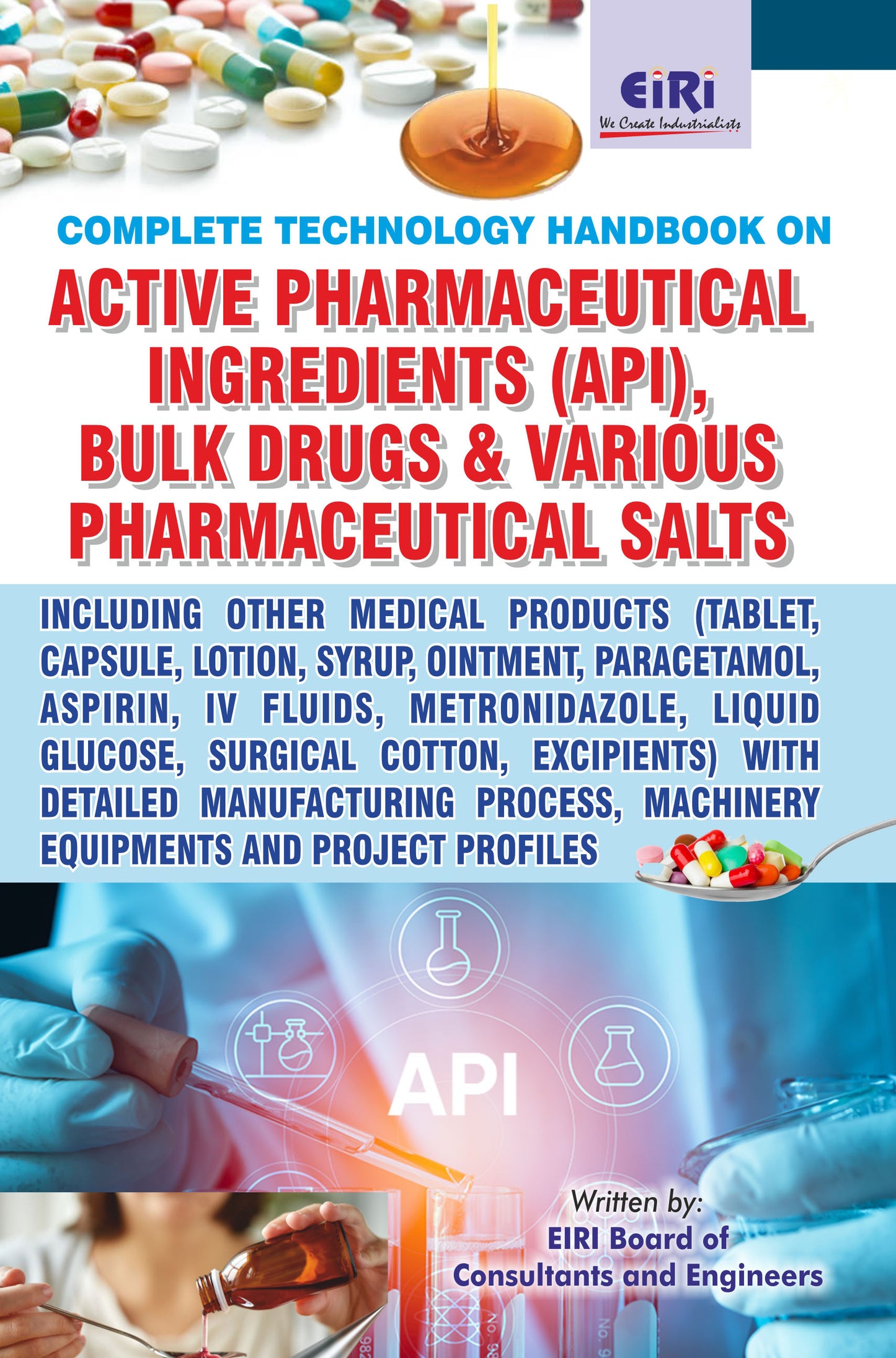
Complete Technology Handbook On Active Pharmaceutical Ingredients, Bulk Drugs & Pharmaceutical Salts Including Medical Products (Aspirin, Metronidazole, Liquid Glucose, Excipients) With Manufacturing Process, Machinery Equipments And Project Profiles
Complete Technology Handbook On Active Pharmaceutical Ingredients, Bulk Drugs & Pharmaceutical Salts Including Medical Products (Aspirin, Metronidazole, Liquid Glucose, Excipients) With Manufacturing Process, Machinery Equipments And Project Profiles
Couldn't load pickup availability
Complete Technology Handbook on Active Pharmaceutical Ingredients, Bulk Drugs & Pharmaceutical Salts including Medical Products (Aspirin, Metronidazole, Liquid Glucose, Excipients) with Manufacturing Process, Machinery Equipments and Project Profiles (Engineers India Research Institute, ISBN 9788189765880) is a technical reference on bulk drug and formulation manufacture.
Opening chapters cover the pharmaceutical sector and the practical steps to set up a manufacturing plant in India, including plant and machinery selection and the licensing framework - retail drug licence, manufacturing drug licence and loan licence - with eligibility requirements, supporting documents and GST registration.
Dosage form chapters then work through the major manufacturing routes. Tablet chapters cover excipients, tabletting formulations, wet and dry granulation, direct compression, compaction and consolidation mechanisms, punching machinery, tablet defects including mottling, and coating methods with vacuum film coating and coated tablet defects. Further chapters cover hard gelatin capsule production and industrial filling, syrup manufacture and preservation, ointment preparation by trituration, chemical reaction and emulsification, lotion and cream formulation, intravenous fluids, liquid glucose, and surgical cotton.
API chapters address manufacture from natural, synthetic and semi-synthetic bases, HPAPI containment, process validation, regulation and inspection, industry segmentation, excipient selection, salt selection strategy with physicochemical, biopharmaceutical, patent and regulatory aspects, and biotechnological routes from biomass. A detailed Good Manufacturing Practice chapter covers quality management, personnel, buildings, equipment, documentation, materials management, in-process controls, laboratory controls, validation, change control, recalls and contract manufacturing. The largest section is an alphabetical series of API monographs, each listing raw materials and manufacturing process.
Frequently Asked Questions
What does the Complete Technology Handbook on Active Pharmaceutical Ingredients and Bulk Drugs cover?
The Complete Technology Handbook on Active Pharmaceutical Ingredients, Bulk Drugs and Pharmaceutical Salts (EIRI, ISBN 9788189765880) covers pharmaceutical manufacture from plant setup to individual molecule synthesis. Its main divisions are: pharmaceutical plant startup and Indian drug licensing; tablet manufacture and coating; capsule, syrup, ointment, lotion and IV fluid production; liquid glucose and surgical cotton; API manufacturing principles, excipients and pharmaceutically acceptable salts; Good Manufacturing Practice guidance for APIs; and an extensive alphabetical series of API monographs giving raw materials and manufacturing process for each molecule.
Who is this API and bulk drug technology handbook written for?
This handbook is written for readers who need process and raw material detail rather than clinical or pharmacological reference. Its intended audience includes bulk drug and formulation manufacturing chemists, production and quality assurance staff in pharmaceutical plants, process development and scale-up engineers, students of pharmaceutical technology and industrial pharmacy, technical libraries, and consultants preparing project reports for API or formulation units.
Who should consider entering pharmaceutical or API manufacturing, and why?
Pharmaceutical manufacture suits entrants with a pharmacy, chemistry or chemical engineering background, or those able to appoint a qualified technical staff member, because a manufacturing drug licence requires competent technical personnel by law. India's position as a large generic and bulk drug producer supports entry at several levels: loan licensing and third-party manufacturing allow a start without owning a full plant; formulation units converting purchased APIs into tablets, capsules or syrups need less capital than API synthesis; and government schemes have supported domestic bulk drug production to reduce import dependence. The constraints are substantial and should be assessed first: Schedule M GMP compliance dictates plant design, air handling and documentation from day one; CDSCO and state FDA approvals govern both premises and products; batch documentation, stability testing and quality control laboratories carry continuing cost; and several molecules require additional licensing under narcotics and psychotropics regulation. Anyone evaluating this sector should budget for regulatory and quality infrastructure before production capacity.
Does the book include actual manufacturing processes for individual drug molecules?
Yes. The largest part of the book is a monograph series arranged alphabetically, with each chapter listing the raw materials and the manufacturing process for one molecule. Coverage spans major therapeutic classes, including antibiotics such as amoxicillin, ampicillin, erythromycin, gentamicin sulfate and ceftazidime; analgesics and anti-inflammatories such as ibuprofen, naproxen, ketoprofen, diclofenac sodium and mefenamic acid; cardiovascular agents; antimalarials including chloroquine phosphate and hydroxychloroquine sulfate; oncology agents; corticosteroids; and biological and nutritional products such as insulin, heparin, folic acid, mannitol and inositol.
What does the book explain about tablet manufacturing?
Tablet coverage runs across two chapters. Manufacturing content includes excipient selection, tabletting formulations, wet granulation, dry granulation and direct compression, the volume reduction mechanism during compression, consolidation behaviour, tablet compaction simulators, punching machinery and equipment types, tablet defects including mottling, packaging, and recent advances in formulation and compression technology. Coating content covers the different coating methods, recent coating technologies, vacuum film coating, coating equipment, and defects specific to coated tablets.
Does the book cover GMP requirements for API manufacture?
Yes. A dedicated chapter sets out Good Manufacturing Practice guidance for active pharmaceutical ingredients, covering quality management systems, personnel, buildings and facilities, process equipment, documentation and records, materials management, production and in-process controls, packaging and identification labelling of APIs and intermediates, storage and distribution, laboratory controls, validation, change control, rejection and re-use of materials, complaints and recalls, contract manufacturers and laboratories, distributors and repackers, specific guidance for APIs produced by cell culture or fermentation, and APIs for use in clinical trials.
What licences are needed to start a pharmaceutical manufacturing business in India?
The book's startup chapter describes the Indian licensing framework for pharmaceutical manufacture, covering the retail drug licence, the manufacturing drug licence and the loan drug licence, together with the eligibility requirements and documents needed to obtain a drug licence, and GST registration. Licences are issued by state drug control authorities under the Drugs and Cosmetics Act, with premises, equipment and technical staff requirements assessed at inspection. Readers should confirm current requirements with their state licensing authority and CDSCO, since rules and Schedule M requirements are revised periodically.
Does the book cover pharmaceutical salts and excipients?
Yes. A chapter on pharmaceutically acceptable salts explains why many drugs are supplied in salt form and covers salt selection strategy, physicochemical aspects, biopharmaceutical implications, and the patent and regulatory considerations that follow from choosing one salt form over another. A separate chapter covers excipients and their relationship to active ingredients, with excipient types also addressed within the tablet and powder-filled capsule chapters.
Share