Complete Book On Cashew Cultivation, Cashew Organic Farming, Processing Of Cashew Apple, Extraction Of Cashewnut Shell Liquid (Cnsl) Of Cashewnut Processing Technology
Complete Book On Cashew Cultivation, Cashew Organic Farming, Processing Of Cashew Apple, Extraction Of Cashewnut Shell Liquid (Cnsl) Of Cashewnut Processing Technology
Couldn't load pickup availability
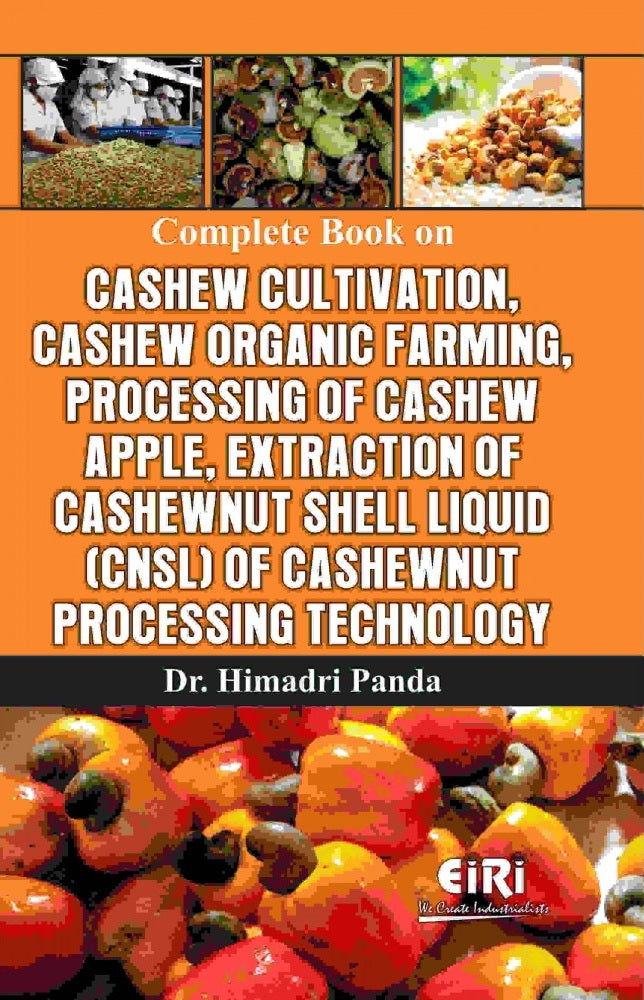
Complete Book on Cashew Cultivation, Cashew Organic Farming, Processing of Cashew Apple, Extraction of Cashewnut Shell Liquid (CNSL) of Cashewnut Processing Technology (Engineers India Research Institute, ISBN 9788193863954) covers the cashew crop end to end: orchard, nut processing, apple utilisation and shell liquid extraction, with three costed project profiles.
Cultivation sections cover botany, varieties and germplasm, quality planting material, canopy management, rejuvenation of senile orchards, high density planting, soil and water conservation, nutrient and water management, cropping systems, pest management and harvesting. Propagation sections cover scions and rootstock, softwood grafting technique and season, nursery management, low cost polyhouse graft production and graft cost. Organic farming has its own chapter covering recommended varieties, manuring trial results, vermicompost, green manuring, inter and mixed cropping, weed management and biological control of tea mosquito bug and stem and root borer.
Nut processing sections cover the full sequence: cleaning, sizing and conditioning, soaking, drum and open pan roasting, the hot oil method, manual and mechanical shelling, separation, pre-grading, drying, peeling, rehumidification, grading, packaging, infestation control and hygiene. Cashew apple sections cover utilisation through juice, pulp, jam, halwa, candy, pickle, powder, osmo-dehydration and wine, plus recipes using dried apple powder and the requirements to start an apple processing unit.
CNSL sections cover shell properties, the composition of the liquid across anacardic acid, cardanol and cardol, and extraction by mechanical, hydraulic press, screw press, roasting, hot oil bath and solvent routes with supercritical carbon dioxide processing. Experimental content covers the influence of shell moisture, size, preconditioning, steaming and heating on yield, a screw press against hot oil bath comparison, and quality determination by specific gravity, pH, viscosity, ash, calorific and iodine value against standard specifications. Application sections cover friction linings, modified CNSL resin, surface coatings, foundry core oil, laminating and rubber resins, cashew cements, epoxy resins, adhesives, surfactants and shell cake use.
Frequently Asked Questions
What does the Complete Book on Cashew Cultivation and Processing cover?
Complete Book on Cashew Cultivation, Cashew Organic Farming, Processing of Cashew Apple, Extraction of Cashewnut Shell Liquid (EIRI, ISBN 9788193863954) covers the whole cashew value chain. Its main divisions are: cashew botany, varieties and germplasm; orchard establishment, soil and water conservation, nutrient and water management; propagation, grafting and nursery management with graft costs; organic cashew farming; nut processing from cleaning and roasting through shelling, peeling, grading and packing; cashew apple processing into juice, pulp, jam, candy, pickle, powder and wine; cashew nut shell liquid extraction by six routes with yield and quality data; CNSL industrial applications; physical and compositional analysis of the nut; and three costed project profiles.
Who is this cashew handbook written for?
This handbook is written for readers working anywhere along the cashew chain. Its intended audience includes cashew processing unit owners and managers, CNSL extraction and cardanol producers, cashew apple processors and fruit product manufacturers, plantation owners and orchard managers, nursery operators raising grafts, agricultural scientists and extension officers working with cashew growers, organic certification and farm advisory staff, students of horticulture and food technology, technical libraries, and consultants preparing project reports for a cashew processing or CNSL unit.
What project economics does the book include?
Three project profiles are given. The cashew nut processing plant profile covers business registration and licensing, location and machinery, manufacturing process and raw materials, followed by fixed capital, raw materials, monthly working capital, total capital investment and annual turnover. The cardanol from CNSL oil profile covers cardanol specification, its benefits and the extraction process, which is the higher-value end of shell liquid processing. The raw cashew nut kernel processing profile covers the process through steam roasting, shell cutting, peeling, grading and packing. Together they let an entrant compare a kernel processing operation against shell liquid and cardanol production, which are complementary businesses on the same raw material.
Who should consider entering cashew processing, and why?
Cashew processing suits entrants in or near a growing belt who can organise raw nut procurement through the season, since raw material supply is the deciding factor rather than the technology. The commercial case is unusually good because a single raw nut yields three separate revenue streams. The kernel is the primary product with established domestic and export demand and grade-based pricing. The shell, normally treated as fuel, yields cashew nut shell liquid and from it cardanol, which sells into friction linings, coatings, resins, adhesives and surfactants at many times the value of the shell as fuel. The apple, roughly ten times the weight of the nut and largely wasted at present, converts into juice, pulp, jam, candy, pickle, powder and wine. Entry is possible at several levels, from manual shelling and grading with modest capital through mechanical shelling lines to CNSL extraction and cardanol production. Processors do best taking more than one of those streams, since the by-products carry little additional raw material cost once the nut has been bought.
What CNSL extraction content does the book include?
CNSL is the most technically developed subject in the book. Composition content covers anacardic acid, cardanol and cardol and the properties of both the shell and the liquid. Extraction content covers six routes: mechanical extraction, hydraulic press, screw press, the roasting method, the hot oil bath method with its basic process sequence, and solvent extraction, together with supercritical carbon dioxide and water processing and the effect of preconditioning on oil yield. Experimental content reports the influence of shell moisture content, shell size, shell size combinations, preconditioning, steaming and heating on extraction, and gives a direct comparative yield between screw press and hot oil bath methods. Quality content covers determination of specific gravity, pH, viscosity, ash content, calorific value and iodine value, with results compared against standard specifications, which is what a buyer will test the product against.
What cashew apple processing content does the book include?
Cashew apple is treated as a commercial opportunity rather than a residue, which suits the scale of the stream available. Content covers post harvest problems and the options for direct consumption, primary processing and preservation. Product coverage includes juice and pulp from ripe apples, cashew apple jam, halwa and candy, pickle, powder and osmo-dehydrated product, alongside wine and alcohol, and the utilisation of apple processing waste. Recipe and product development content covers the preparation of cashew apple powder and its use in sweet and masala cookies, porridge mix, sweet and masala doughnuts and sponge cake, plus fruit chutney and sweet pickle in oil. A dedicated section sets out the primary requirements to start a cashew apple processing unit, which makes this a practical starting point for a grower or processor adding a second product line.
What cultivation and organic farming content does the book include?
Cultivation is covered to the level an orchard manager or extension officer needs. Agronomy content covers variety selection, production of quality planting material, management of plant canopy architecture, rejuvenation of senile orchards, high density planting, nutrient and water management, cashew based cropping systems, pest management and harvesting of both nuts and apples. Soil and water conservation covers in-situ techniques with trench types, filling of natural gullies, contour bunding, terracing, catch pits, cover crops, green manuring and mulching. Propagation covers scions and rootstock seedlings, softwood grafting technique, grafting season, nursery management, graft production under low cost polyhouses and the cost of graft production. Organic farming has its own chapter covering recommended mid and late season flowering varieties, planting pit and spacing, organic manuring trial results, vermicompost preparation, organic nutrient management, green manuring, inter and mixed cropping, weed management, biological management of tea mosquito bug and stem and root borer, and resulting yield.
What does the book cover on nut processing operations?
Nut processing is covered as a complete line, with both traditional and mechanised options at each stage. Preparation content covers cleaning, sizing and conditioning, soaking, and large scale cleaning and conditioning. Roasting content covers drum roasting, open pan roasting, the hot oil method and a simple hot oil process with centrifuging. Shelling content covers traditional manual shelling with quality control, mechanical shelling, and the development of a cashew nut sheller in India. Downstream content covers separation, pre-grading, drying, manual peeling, rehumidification, grading, packaging and preservation. Supporting content covers infestation by ants, grain weevils and meal moths, food hygiene and the legal position, causes of food poisoning, personal hygiene, cleanliness of equipment and the working area, and other sources of contamination, alongside determination of nut size, shape and density as process design inputs.
Share