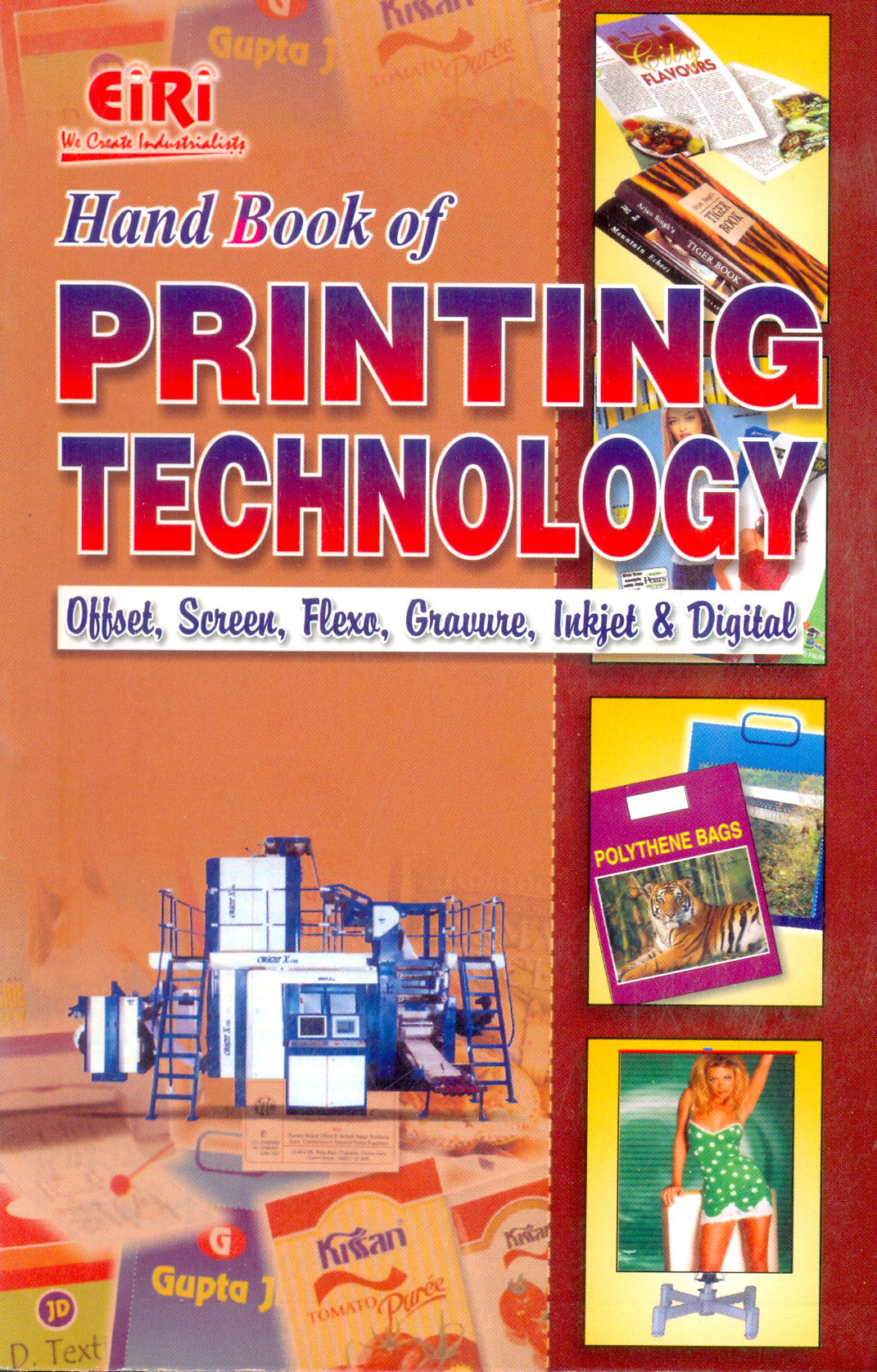
Hand Book Of Printing Technology Offset, Screen, Flexo, Gravure, Inkjet And Digital
Hand Book Of Printing Technology Offset, Screen, Flexo, Gravure, Inkjet And Digital
Couldn't load pickup availability
Hand Book of Printing Technology Offset, Screen, Flexo, Gravure, Inkjet and Digital (Engineers India Research Institute, ISBN 9788186732755) covers every major printing process in one volume, from typesetting and prepress through press operation to finishing, with fifteen costed plant economics and supplier directories.
Foundation sections cover the major printing processes across relief, intaglio, screen, lithographic and electrostatic printing, the printing cycle, and the organisation of printing services through commercial, trade, special purpose, quick and in-plant printing, publishing and package printing. Composition sections cover hand and machine composition, photo optical and photo scanning systems, digital typesetting, typeface classification, type measurement, page planning, copy fitting, cold type composition, dry transfer and pressure sensitive type, phototypesetting, desktop publishing with a comparison against conventional production, page description language and proof reading.
Prepress sections cover process cameras with optics and exposure systems, colour electronic prepress, image capture, assembly and manipulation, photographing line and continuous tone copy with screen rulings, dot shape, halftone exposure and filter factors, negative processing, contact printing, stripping, proofing, etching, opaquing and registration, scanner resolution, white and black point adjustment and workflow, and offset platemaking across presensitized, wipe on, multimetal, waterless, direct image, electrostatic and photo direct plates with graining, anodizing and coating.
Press sections cover the offset press in full with sheet feeder, plate and blanket cylinders, inking and damping systems, registering and delivery systems, make ready and clean up checklists, multicolour and process colour printing, web offset with folding, cutting and infrared drying, newspaper printing including anilox and waterless offset, and standard specifications for offset publications with density, dot gain, screen angles and ink trapping. Further sections cover flexography with rubber and photopolymer platemaking, anilox rolls, web tension control and press types; gravure with conventional and electronic engraving, cylinders, web control and finishing; screen printing with fabrics, mesh counts and stencils; inkjet, digital and computer to plate printing; security printing and bar coding; and supplier directories.
Frequently Asked Questions
What does the Hand Book of Printing Technology cover?
Hand Book of Printing Technology Offset, Screen, Flexo, Gravure, Inkjet and Digital (EIRI, ISBN 9788186732755) covers the whole printing trade in one volume. Its main divisions are: the major printing processes and the organisation of printing services; typographic technology, type composition and desktop publishing; page description language and proof reading; prepress with process cameras, line and halftone photography, stripping and scanning; offset platemaking and plate types; presses with the offset press, web offset and newspaper production; specifications for offset publications and proofing techniques; modern processes including inkjet, laser, thermal and computer to plate; flexography and packaging printing plates; gravure and packaging; screen printing with stencils, fabrics and substrates; choosing a printing process with the advantages and limitations of each; security printing including currency, cheque and card printing with holograms; bar coding; inkjet and digital printing; fifteen chapters of plant economics; and directories of machinery and raw material suppliers.
Who is this printing technology handbook written for?
This handbook is written for readers who work with print and need one reference that spans every process. Its intended audience includes printing press owners and works managers, offset, flexo, gravure and screen printing machine operators and minders, prepress and DTP studio staff, platemakers and scanner operators, packaging printers and converters producing labels, cartons and flexible film, textile and garment printers, newspaper production staff, print buyers and production managers specifying a job, quality control personnel investigating dot gain or register problems, students and apprentices of printing technology and graphic arts, technical institutes and libraries, and entrepreneurs or consultants preparing a project report for a printing or packaging unit.
What plant economics does the book include?
Fifteen chapters carry plant economics, each covering plant and machinery, fixed capital, raw materials, monthly working capital, total capital investment and annual turnover. The units costed are: an offset printing press; a DTP and printing unit; an offset security printing press; rotogravure printing for flexible packaging; combined flexographic and rotogravure printing; screen printing on paper and cards; screen printing on cotton cloth; heat transfer labels by the screen printing process; paper transfer ink labels of the temporary tattoo type; ceramic tile printing medium for screen printing; textile printing on a job work basis; cloth printing on a job work basis; hand block printing; computer continuous stationery; and automatic printing. This spread lets an entrant compare a general commercial press against packaging, label, textile and specialty routes on the same costing format before choosing a direction, and the supplier directories that close the book name machinery sources for each.
Who should consider starting a printing business, and why?
Printing suits entrants who want a job work business with repeat industrial customers rather than consumer selling, and it is one of the few trades where the same skill supports several very different ventures. The commercial case rests on three points. Demand is tied to other people's production rather than to fashion: every manufacturer needs labels, cartons, pouches, forms and manuals, and reorders them continuously, so a press that wins a packaging customer holds that volume for years. Entry capital scales widely, from hand block printing and a screen printing table through a single colour offset press and a DTP unit to a rotogravure line for flexible packaging, and all of these are costed here on the same format so the figures can be compared directly. Margin follows specialisation: label, heat transfer, ceramic tile medium, continuous stationery and security printing all command better rates than general commercial work because fewer presses can do them. The book supports the choice with a dedicated chapter on choosing a printing process, setting out the advantages and limitations of letterpress, lithography, photogravure, screen, collotype and flexography and what each process is best used for, so an entrant can match the process to the customers available locally before buying a machine.
What offset printing content does the book include?
Offset is covered in the greatest depth, from principle to pass sheet. Press content covers the offset process with its advantages and limitations, duplicators, perfector and multicolour presses, sheet feeders and separators, plate and blanket cylinders, the inking system, the damping system with brush, cotton cover, paper and sleeve options and several automatic damping units, dampening solutions, feeding and registering systems, sheet, stream and web fed presses and the delivery system. Operating content covers pre make ready, make ready and clean up checklists, pile loading and raising, suckers, air blast nozzles, transport and hold down rollers, rotary and flat brushes, double sheet control, front and side lays, swing arm grippers, sheet detection and transport, feeder and feedboard setting, plate fitting, damper preparation, ink preparation, register controls, obtaining the pass sheet, wash up, plate cylinder packing, image size change, impression cylinder pressure and blanket maintenance. Web content covers cylinder dimensions, inking and damping, photopolymer relief plates, newspaper printing, length, cross, concertina, combination and ribbon folding, cutting, rewinding, infrared drying, durometer, anti set off spray powder control, pressroom lighting and paper moisture. Standards content covers solid density and dot gain on coated paper and glazed newsprint with tolerances, screen angles, colour sequences, ink quality, proofing specifications, progressive proofs, control strips, viewing conditions and ink trapping.
What flexography and gravure content does the book include?
Packaging printing is treated as a subject in its own right, which suits the growth in label and flexible packaging work. Flexo platemaking content covers moulded rubber plates, photopolymer plates from both sheet and liquid resin with back exposure, face exposure, washout, drying, chlorination and post exposure, metal engraving quality and types, laser engraved design rolls, rubber selection, vulcanising, grinding and polishing, moulding press equipment, plates for corrugated printing, backing materials, compressible construction and durometer. Flexo press content covers the principles of flexography with fountain roll, anilox roll, plate and impression cylinders, sleeves, inking systems and ink troughs, resins and solvents, alcohol and water based inks, in-line and central impression printing units, the stack press, central impression press and in-line press, web tension control with tension zones, brakes, clutches, dancer roll and transducer systems and closed loop control, unwind and rewind equipment with flying splice, infeed and outfeed cooling drums, web guides, anilox and fountain roll construction, nip loading, reverse angle doctor blade systems, deck control, continuous inking, side and circumferential register control, roll balancing, web viewers, in-line laminating and folding carton presses. Gravure content covers conventional gravure and electronic engraving, printing units, cylinders, ink containers, web control and register with manual and automatic correction, web turning, drying and cooling, liquid inks, zigzag and combination folding, rewinding, batch counting, bundling, labelling and inserting devices, web finishing, offset gravure and sheetfed gravure with its applications and advantages.
What screen printing content does the book include?
Screen printing is covered practically, including how to build the equipment, which makes it the most accessible process in the book. Screen content covers the screen printing press, types and construction of fabrics, mesh count, mesh strength and mesh opening, and stretching the fabric, with step by step instructions for building a screen process press covering the bill of materials, frame construction, attaching the fabric, taping and sealing the screen, preparing and hinging the base, adding a frame support, print drying equipment and constructing specialty equipment. Stencil content covers hand cut paper stencils, hand cut film stencils, and photographic stencils in indirect, direct and direct or indirect forms, with emulsion mixing, screen coating, exposure, development, washout and washout temperature, and adhering the stencil. Substrate content covers paper types and stock colour, textiles and fabric types with printing on t-shirts, plastics and their types, metals, woods and ceramics. Automatic press content covers the printing forme and the features that distinguish screen printing, and four of the costed project profiles are screen printing based, covering paper and cards, cotton cloth, heat transfer labels and ceramic tile printing medium.
What digital, inkjet and specialty printing content does the book include?
Modern and specialty processes are covered alongside the conventional ones, which keeps the book useful for a press considering a digital addition. Inkjet content covers continuous inkjet technology, drop on demand systems, thermal and piezoelectric inkjet and inkjet applications. Digital content covers direct imaging presses, plate exposure, digital toner based printing, press configuration, digital colour presses, computer to press and plateless printing, and digital printing for both printers and prepress companies, together with the implications of direct digital presses for personalised publications, short run and on demand book production and low cost colour access. Further modern process content covers laser, ion deposition, LED, thermal direct and thermal transfer printing, film plotting machines and computer to plate technology with plates, films, imagesetters, punch systems, raster image processors and job management. Proofing content covers simple, colour, film laminate, pigment and toner laminate, ink on paper, inkjet, video, electrostatic and digital proofs with the advantages and recommended use of each, and proof correction symbols. Specialty content covers security printing including currency and cheque printing, credit cards, hologram types and their uses in packaging, book covers and advertising, and numbering with magnetic ink on rotary presses, alongside a chapter on bar coding covering how codes work, where they are used, the main symbologies, continuous and discrete code structure and how discrete codes are produced.
Share